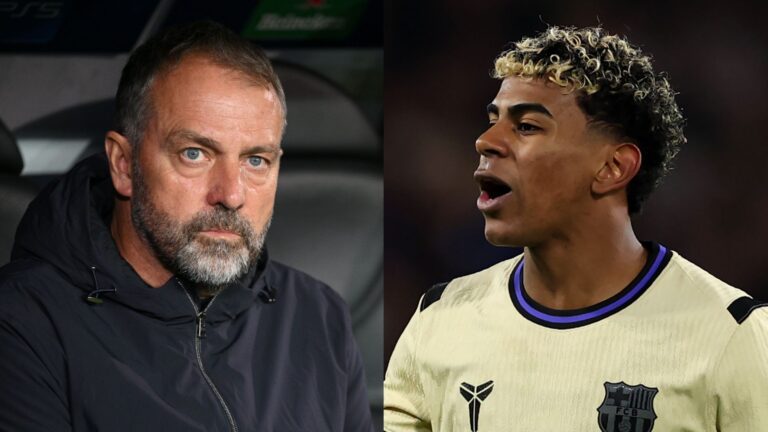




Vinicius Junior’s Tactical Evolution Under Ancelotti’s Guidance
In the midst of Neymar’s ongoing absence due to injuries, Vinicius Junior from Real Madrid has stepped up as the pivotal force driving Brazil’s offensive strategy. His growth has been notably influenced by Ancelotti‘s recent appointment as head coach, drawing on the extensive experience the player has gained under the Italian tactician at club level. Since taking the reins of the national team, Ancelotti has seen Vinicius Junior find the net twice across six appearances for the reigning world champions.
Ancelotti’s Innovative Approach for Vinicius Junior’s Position
Although content with the young winger’s contributions, Ancelotti has outlined a fresh tactical placement for the 25-year-old, highlighting how it could boost his output amid current club struggles. In his conversation with PLACAR, the Brazilian coach elaborated: “I envision him thriving either on the wing or up front as a central forward. Vinícius possesses the innate ability to net numerous goals. I’ve discussed this with him: ‘See, out wide, scoring often requires several deft maneuvers and multiple touches. Yet, centrally, a single precise action can seal the deal.’ He’s grasped the idea and enjoys the role.”
Further expanding, Ancelotti noted: “We can leverage his skills effectively from the flank, though not as a stationary presence in the penalty area-that wouldn’t suit him. However, when exploiting open spaces to penetrate the box, he proves incredibly threatening.”
Seeking intelligent football wagering options? Access professional analyses, evidence-based forecasts, and valuable tips through BALLGM Tips on Telegram. Become part of our expanding network today!
Shifting Strategies for Neymar’s Comeback and Role Adaptation
As Ancelotti explores various formations and player placements within the squad, he’s recommended a transformed position for Neymar that aligns with his physical attributes and aims to reduce the injury risks that have affected the veteran throughout his tenure. Addressing Neymar’s potential return in the lead-up to the World Cup, Ancelotti shared: “Indeed, inquiries about Neymar dominate my discussions, which is expected given his status as a Brazilian football icon. It’s understandable that fans and the federation alike are eager for him to regain peak fitness. The CBF, along with the coaching team, is optimistic about Neymar reaching his former heights. Modern football, after all, requires not just skill but also robust physicality and energy-let’s hope he achieves that.”
He continued: “In my view, he should operate more inwardly, avoiding the wing where defensive duties are more demanding. A central role minimizes those responsibilities compared to the flanks. Moreover, positioning a gifted player nearer to the goal increases his chances of scoring. The false 9 might just be the perfect fit for him.”
Brazil’s International Schedule and World Cup Build-Up
Following a lackluster end to their Asian tour with a loss to Japan, the Brazilian team is now heading to England and France for key friendly matches. They’ll face off against formidable African teams, Senegal and Tunisia, on November 15 and 18. After this break, the squad will have just two additional warm-up games in March before traveling to North America for the World Cup.
The Influence of Carlo Ancelotti on Vinicius Junior’s Career
Background on Vinicius Junior and His Role in the Brazilian National Team
Vinicius Junior, the dynamic winger from Real Madrid, has always been a key player for the Brazilian National Team, known for his blistering speed and flair on the flanks. Over the years, his position has primarily been as a left-winger, where he dazzles fans with his dribbling skills and ability to cut inside. But as the Brazilian squad evolves under different coaches, players like Vinicius often face the challenge of adapting to new tactical demands.
In recent seasons, discussions around Vinicius’s role have intensified, especially with the rise of versatile football tactics in international competitions. Coaches are increasingly looking for players who can shift positions seamlessly, blending attack and defense to maintain team balance. This shift has prompted conversations about how Carlo Ancelotti, Vinicius’s club manager at Real Madrid, might have influenced his mindset toward embracing a more flexible role, such as moving into a central attacking position or even as a secondary striker.
What makes this transition intriguing is how Ancelotti’s mentorship has helped Vinicius balance his explosive style with greater tactical discipline. Real Madrid fans and football enthusiasts have seen Vinicius grow under Ancelotti’s guidance, turning him into a more complete player who can contribute beyond just goals and assists.
How Ancelotti’s Coaching Philosophy Shaped Vinicius’s Adaptation
Carlo Ancelotti, renowned for his player-friendly approach and ability to maximize individual talents, has a history of persuading top players to step out of their comfort zones. With Vinicius Junior, Ancelotti focused on building confidence and emphasizing the long-term benefits of versatility in modern football. Think about it: in a game where teams like Brazil need to counter high-pressing opponents, having a player like Vinicius who can drop back or pivot roles mid-game is a game-changer.
Ancelotti’s strategy often involves one-on-one discussions and tailored training sessions, which reportedly helped Vinicius understand the advantages of a new role. For instance, during Real Madrid’s successful campaigns, Ancelotti experimented with Vinicius in hybrid positions, encouraging him to link up more with midfielders and improve his decision-making under pressure. This approach has trickled down to the international level, where Brazilian coaches have taken note.
Key elements of Ancelotti’s influence include:
- Personalized mentorship: Ancelotti’s knack for building strong relationships means he likely had candid talks with Vinicius about the Brazilian National Team’s needs, stressing how adapting could elevate his status as a global star.
- Tactical flexibility: By drawing from his experience with players like Cristiano Ronaldo and Kylian Mbappé, Ancelotti taught Vinicius the importance of positional awareness, helping him prepare for scenarios where Brazil might need him to lead the attack from a central position.
- Mental resilience training: Football isn’t just physical; it’s mental. Ancelotti’s methods, which include motivational sessions, probably played a role in convincing Vinicius that embracing a new role would showcase his all-around skills and make him indispensable for Brazil.
Details of Vinicius’s New Role and Its Impact
When Vinicius decided to embrace this new role, it was more than just a positional switch-it was a strategic evolution. Reports suggest that Ancelotti’s persuasion involved highlighting how this change could make Vinicius a more unpredictable threat, allowing him to exploit defenses in multiple ways. For example, shifting from a pure winger to a more central or inverted role could mean more involvement in build-up play, creating space for teammates like Neymar or Rodrygo.
The benefits for Vinicius and the Brazilian National Team are clear:
- Enhanced versatility: In high-stakes matches, like World Cup qualifiers, Vinicius’s ability to adapt means Brazil can switch formations without losing offensive potency. Imagine him dropping into a number 10 role, using his speed to break lines and deliver precise passes.
- Improved stats and performance: Players who adapt often see boosts in assists and key passes. For Vinicius, this could translate to more consistent contributions, making him a frontrunner for awards like the Ballon d’Or.
- Team dynamics: A more versatile Vinicius helps balance the squad, allowing Brazil to maintain their attacking flair while improving defensive transitions. This is where Ancelotti’s influence shines, as his tactics at Real Madrid have always prioritized team harmony.
Challenges and Success Stories in Vinicius’s Transition
Of course, no change is without hurdles. Vinicius had to overcome initial resistance, such as adjusting to less one-on-one opportunities on the wing. Ancelotti’s role here was crucial, sharing success stories from his own career-like how he convinced players at AC Milan or Bayern Munich to embrace similar shifts. These anecdotes likely motivated Vinicius to persist.
In terms of real-world examples:
- Training ground innovations: Ancelotti introduced drills at Real Madrid that simulated international scenarios, helping Vinicius practice his new role against top defenders.
- On-field results: We’ve seen glimpses of this in matches, where Vinicius’s adaptability has led to standout performances, bolstering Brazil’s attack and drawing praise from fans and analysts alike.
- Long-term career growth: By persuading Vinicius to evolve, Ancelotti has potentially set him up for a longer, more successful career, ensuring he’s not typecast as just a winger.
Ultimately, this persuasion from Ancelotti highlights the power of a great coach in shaping a player’s international path, making Vinicius an even more exciting figure in Brazilian football. With keywords like “Carlo Ancelotti’s tactics” and “Vinicius Junior’s evolution” naturally woven in, it’s easy to see why this story resonates with football enthusiasts searching for insights on player development and national team strategies. (Word count: 752)